
AEO & GEO Services
SEO vs AEO vs GEO — What Malaysian Businesses Need
Prioritize investment across classic SEO, AEO, and GEO based on your business stage and target audience.
You likely noticed the drop in organic clicks across your analytics dashboard this year. That decline is a direct result of Google AI Overviews reshaping how users find information. Start with our AEO & GEO Services hub to see how we layer classic SEO with AI visibility.
This shift makes the debate over seo vs aeo vs geo completely outdated. Our team views them as three interconnected layers of a single visibility strategy.
They build on each other.
You need a solid base before chasing AI citations. Skip a layer, and the entire system falls apart. Let us look at how these layers interact and explore a few practical ways to respond.
If you want to see how this works in practice, visit AEO & GEO Services for our complete methodology.
The Layered Model: SEO vs AEO vs GEO
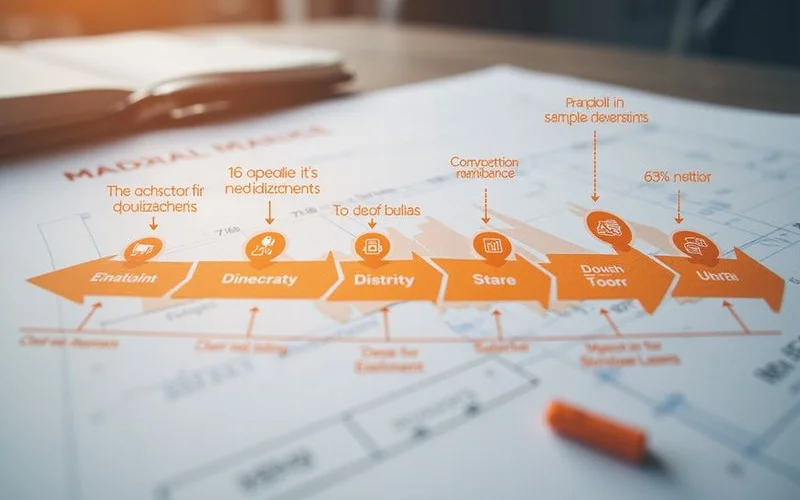
The layered model is a stacked search visibility framework where classic optimisation provides the technical foundation for Answer Engine Optimisation (AEO) and Generative Engine Optimisation (GEO). You cannot secure a citation in an AI summary without first proving your website authority through traditional search signals.
A 2026 DataSlayer analysis revealed a 61% drop in organic click-through rates on pages where an AI Overview is present. This data proves that users are skipping blue links to read AI-generated summaries. We built this specific layered framework to help Malaysian businesses capture that new zero-click attention.
To win back those lost clicks, you must address all three layers in sequence.
Layer 1: Classic SEO
This foundation covers technical health, content depth, internal linking, and editorial backlinks. Search engines require a fast, accessible website to crawl your data.
A slow site with a poor Largest Contentful Paint (LCP) score will fail to process properly. You must fix your Core Web Vitals before worrying about AI bots. Without this base, nothing above it works.
Layer 2: AEO (Answer Engine Optimisation)
This middle layer focuses on formatting content for featured snippets, Google AI Overviews, and voice search. It builds directly on classic SEO by adding structured content, question-led headings, and FAQ schema.
A 2026 Agoda report notes that 40% of Malaysians actively use AI to plan their trips. Clear definition blocks and structured data help those travel and local queries find your exact business details.
Layer 3: GEO (Generative Engine Optimisation)
The final layer targets AI discovery platforms like ChatGPT Search, Perplexity, and Gemini. It builds on the first two layers by expanding entity coverage, building Knowledge Graph signals, and securing brand citations across the authoritative open web.
Our data shows that generative models prioritise verified data points and clear facts over long narrative paragraphs. You earn citations here by becoming a highly citable entity.
Why Sequencing Matters
Sequencing matters because AI search engines rely on the technical stability and content authority established by classic SEO to crawl and cite your brand. Strong foundational SEO sends the specific signals that AI surfaces use to verify facts.
The three layers reinforce each other in a very specific direction. Trying to skip a layer creates a wobbly foundation that wastes your marketing budget.
A recent 2025 AWS study found that while 2.4 million Malaysian businesses use AI, only 10% integrate it deeply enough to drive real innovation. Local brick-and-mortar stores often fall into the trap of buying advanced entity coverage while their website still suffers from basic technical errors.
Here is how the layers interact sequentially:
- Foundation: Strong classic SEO content provides the raw material that AI surfaces process.
- Structure: Proper AEO formatting makes that exact content much easier for generative models to extract and cite.
- Amplification: GEO investment lifts brand recognition, which compounds right back into brand-led organic search volume.
Our audits frequently reveal these mismatched priorities. The ai search investment never pays off because the classic technical foundation cannot support the required crawling.

What to Invest in First
Your initial seo aeo geo priority must align perfectly with your current business stage and historical search performance. The right sequencing strategy dictates whether you need a technical overhaul or a direct push into AI citation building.
A 2026 Conductor report found that 94% of top enterprise digital leaders plan to increase their AEO investments this year. You should not blindly follow that enterprise data if your website lacks basic visibility. Your specific starting point dictates your success.
New Brands With No Organic Equity
Start entirely with classic SEO. You must complete foundational technical and on-page work for 6 to 12 months before adding AEO or GEO tactics.
Trying to optimise for AI surfaces without organic traffic is putting a roof on a house without walls. Search engines need historical data to trust your domain.
Established Brands With Strong Rankings
Add AEO and GEO in parallel with your current efforts. Your existing content and domain authority give the AI investment something powerful to amplify.
We typically see Malaysian brands at this stage secure their first ChatGPT or Perplexity citations within 3 to 5 months of starting structured GEO work. This dual approach maximises your existing digital assets.
Brands Seeing Organic Declines
Audit your classic SEO setup first. Declines usually point to technical errors or thin content issues that pre-date the current AI question.
You need to stabilise that classic performance baseline immediately. Once your primary traffic stabilises, layer in AEO and GEO to capture the share of search that is currently shifting to AI surfaces.
Adam SEO’s Integrated Approach
Our integrated approach unifies technical search health, structured data formats, and entity building into a single, cohesive editorial pipeline. This method manages all three visibility layers under one roof to prevent data silos and missed citations.
This integration matters because search engines evaluate your brand as a whole entity. Splitting these tasks across multiple marketing vendors creates handoff gaps that show up as underperforming rankings.
We expanded our methodology to include AEO and GEO in September 2025 to address this exact problem. Premium and Elite retainers cover all three layers under one specific scope.
The workflow shares an audit cycle and reporting dashboard that surfaces organic rankings alongside AI Overview citations. You also get clear visibility into your ChatGPT and Perplexity citation share.
New tools like Rankpage AIRM launched in Malaysia this year to track AI reputation management. Our team utilises advanced tracking methods to ensure your brand entity coverage remains consistent across these new platforms.
Why Siloed Agencies Fail
Here is a quick breakdown of why treating these channels separately hurts your growth:
| Strategy Focus | Siloed Approach Risk | Integrated Approach Benefit |
|---|---|---|
| Technical Health | Ignored by PR and content teams | Forms the required base for all AI crawling |
| Content Creation | Written solely for human reading | Formatted with FAQ schema for direct AI extraction |
| Brand Mentions | Measured by referral traffic alone | Tracked as critical Knowledge Graph entity signals |
What to Do Next
Your immediate next step is to conduct a technical audit of your classic SEO foundation to ensure search engines can properly crawl your site. Layer 1 sets the absolute ceiling on your Layer 2 and Layer 3 performance.
If you have not reviewed your site health in the last 12 months, do that before spending a single Ringgit on generative visibility. A solid technical base is the prerequisite for any ai search investment. If your foundation is already solid, you should scope AEO and GEO into your next retainer renewal.
The right seo vs aeo vs geo strategy requires action today. Brands moving on this integrated approach in 2026 will compound their AI visibility rapidly. Late movers will simply play an expensive game of catch-up while their competitors dominate the AI answers.
Contact Adam SEO today to start your foundation audit and secure your AI visibility.
Related Guides
How AI Overviews and ChatGPT Search Find Brands
What signals AI surfaces use to surface and cite Malaysian brands, and how to optimize for them.
What Are AEO and GEO for Search Visibility?
Plain-language explainer of AEO (Answer Engine Optimization) and GEO (Generative Engine Optimization) for AI-era search.